top of page
For the Love Of Nature, Art and Bad Humor
A Comic Gallery of Creative Expression in the Pursuit of Knowledge
Eelgrass
(Tapegrass, Wild Celery, Tickly-ew grass)
Vallisneria americana

The most common native freshwater seagrass in Florida.
It lives, breeds, tickles your feet, and dies - all underwater.
Some may find it annoying while swimming,
but it is super critical to aquatic ecosystems.
Everything needs eelgrass. Florida's economy
needs eelgrass. The whole food web that supports
life needs eelgrass. Even if you've never heard of
eelgrass - you need eelgrass.

Eelgrass filters water, produces oxygen, stores carbon, absorbs nutrients, and captures sediments that degrade water quality - all while providing food, habitat,
and shelter for fish and wildlife.

It's vital to the food chain. Invertebrates live in the grass. Amphibians, reptiles, fish, and waterfowl eat those invertebrates - and each other - around the grass.
When the grass dies, bacteria and fungi break it down, feeding the invertebrates, which feed the rest of the
food web all over again.

Endangered species like the manatee eat eelgrass too. Everything in the aquatic ecosystem either eats eelgrass or eats something that does - which connects outward to the broader global buffet. Everything is linked.

But that buffet can get rudely interrupted.
Excess nutrients from agriculture, septic tanks, and urban runoff introduce nitrogen and phosphorus into the water, boosting native algae growth and fueling invasive harmful algae - until thick green goop smothers the grass.
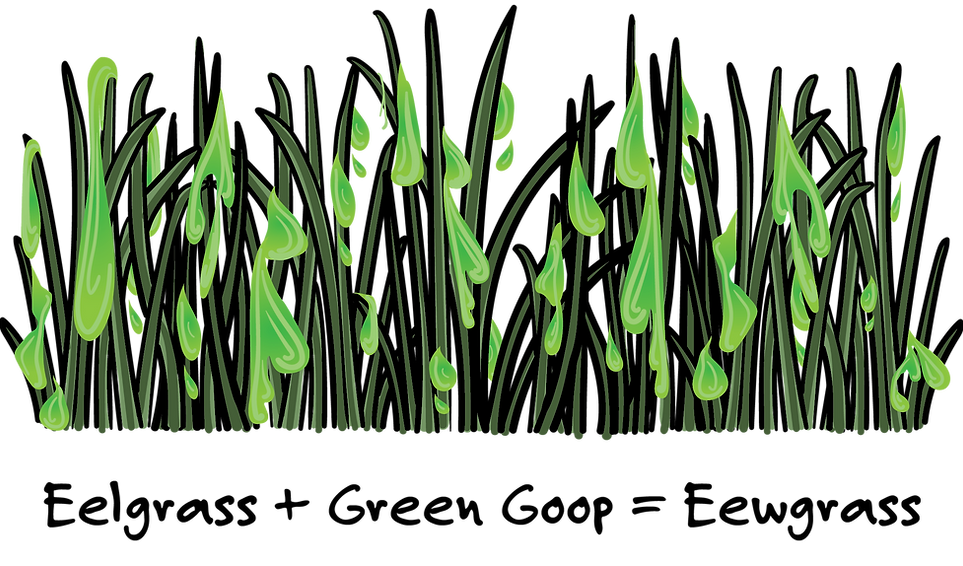
The algae reduces water clarity and slows the grass's
growth and productivity - bad news for every organism
in the eelgrass food chain, and bad news for
commercial fishing, recreation, tourism, the economy,
and eventually, us. It's all connected.

For food chains and economies alike:
pull one link and the whole chain breaks.
Even eelgrass. Be nice to eelgrass.
Even if it tickles.

References:
https://en.wikipedia.org/wiki/Vallisneria_americana
https://plants.ifas.ufl.edu/plant-directory/vallisneria-americana/
https://myfwc.com/research/habitat/freshwater-plants/vallisneria/
Special thanks to Jay Exum, Ph.D. Wildlife Ecology for his expert fact checking!
bottom of page