top of page
For the Love Of Nature, Art and Bad Humor
A Comic Gallery of Creative Expression in the Pursuit of Knowledge
Florida Black Bear
Danger floof - Ursus americanus floridanus
Florida's largest native land mammal, and the only bear found here. No grizzlies. Just some grizzly Florida men.
But that's a different story.

Black Bears have five toes per foot, fuzzy muzzles
and can eat 5,000 calories a day!
But that's nothing compared to fall, when they eat for
18 hours straight to pack on pounds before winter.
That's closer to 20,000 calories a day.
About 100 doughnuts.
They're opportunistic omnivores with a taste for
whatever's around: roughly 80% plants, 15% insects,
5% animal, 0% doughnut.
Unless they got into someone's trash.
More on that later.

They have excellent (nearsighted) eyesight, hearing,
and a sense of smell that can detect food more than a
mile away. They’re also skilled tree climbers, strong swimmers, and fast runners over short distances.
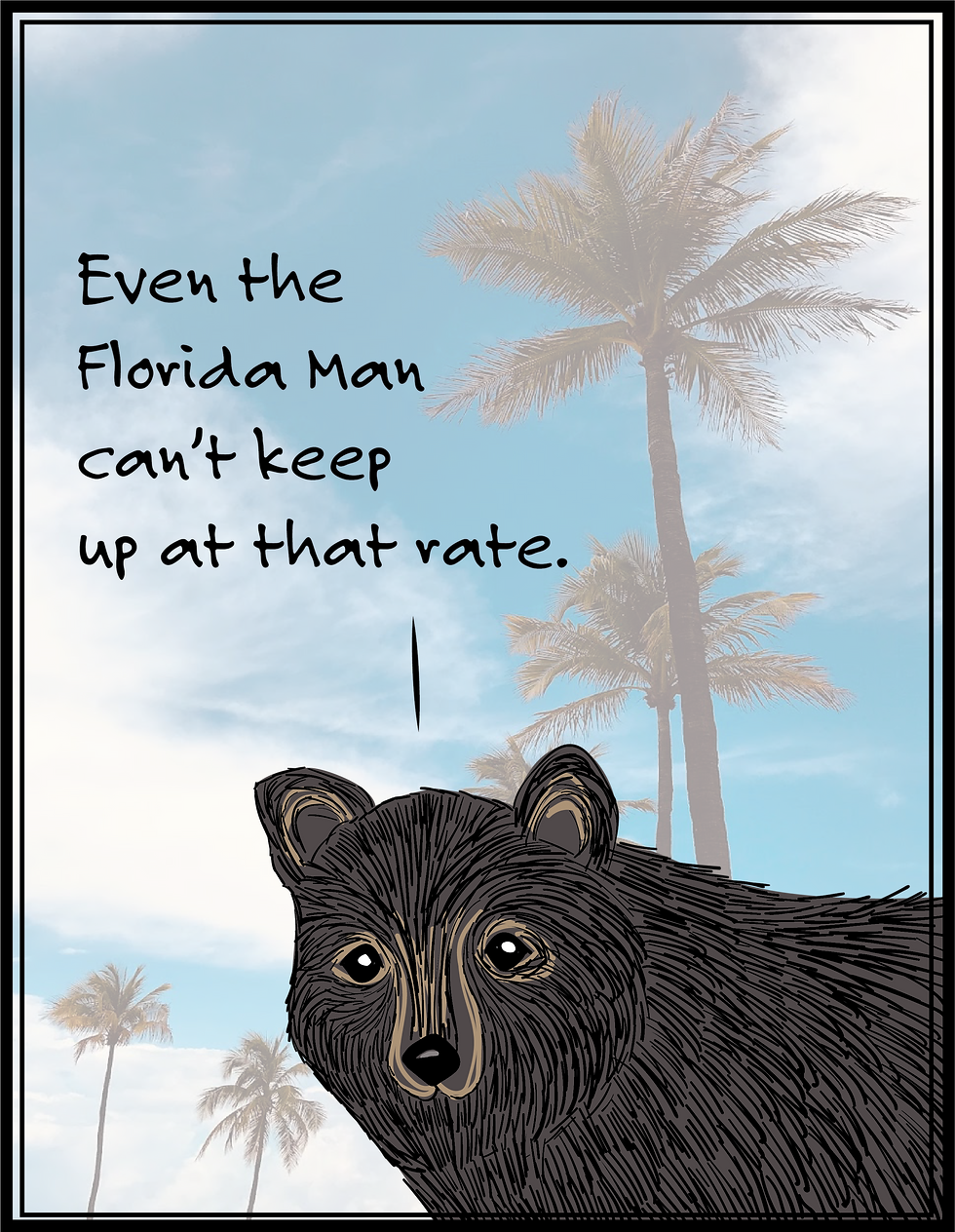
They can outrun Florida Man to a doughnut
by at least 20 mph. Don’t even try it.

Bears are shy, reclusive, and usually solitary -
except during mating season or when cubs are around.
They communicate through vocalizations, body language, and scent marking. Not unlike Florida Man.
They're not especially territorial and don't usually defend their range from other bears - unless there's a food source worth protecting. (Like doughnuts.)
Adult males roam up to 120 square miles
in search of mates and food.

Thanks to human development, they now have access to only about 45% of their original range. Making life hard and dangerous for modern day Florida bears.
Before European settlement, an estimated 11,000–12,000 bears roamed Florida and into Georgia, Alabama, and Mississippi. By the mid-20th century, Florida had lost more than 7 million acres of forest and wetlands to development, leaving habitat fragmented into 8 isolated populations. Today, an estimated 3,000–4,000 bears remain.

Connected wildlife corridors are critical - they link bears to food sources other than trash and doughnuts and prevent the genetic problems that come with isolation.

As natural habitat shrinks, bears move into
neighborhoods. There are 1.3 million households in
bear country, and bears love unsecured trash, pet food, birdseed, and neglected BBQ grills. Easy food makes bears dependent on humans and too comfortable around us.
Add genetic isolation to the mix, and you get bears that
are both ecologically compromised and increasingly
bold around people. Not good for anyone.
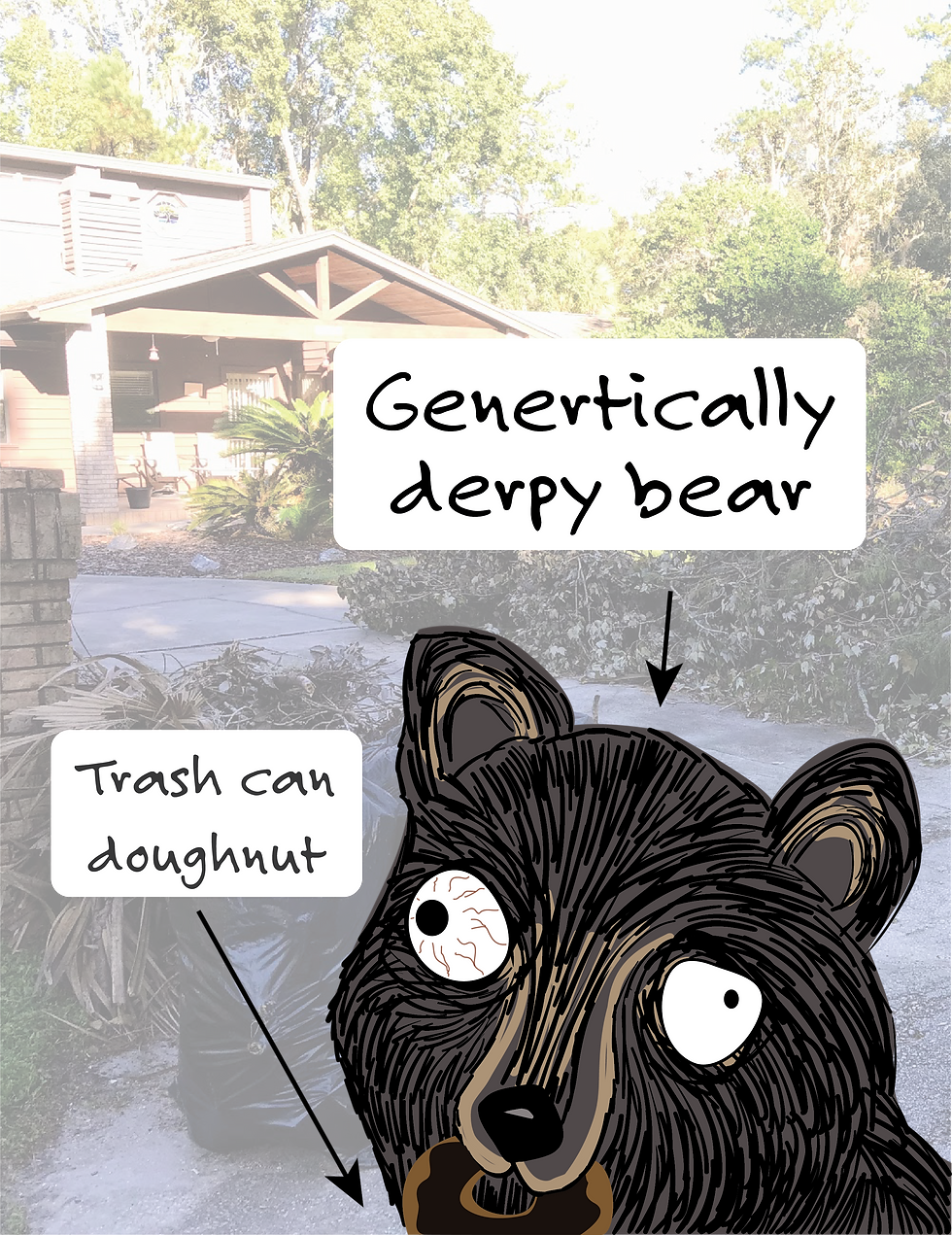
Bear-proof trash cans, proper waste disposal, and
basic home maintenance keep bears in their natural environments where they want to be - away from Florida Man and roads, which kill more bears than anything else.

Protecting bear territory isn't just good for bears.
Orchids, pitcher plants, Florida scrub jays, gopher tortoises, Eastern indigo snakes and countless other species all share that habitat and would disappear without it.

Conservation land also provides natural protection from flooding, erosion, and storms - which protects our homes. And our doughnut shops.
Conclusion: Bears are cool
Bear Conservation = Good for everyone
No Bear Conservation = Bad for everyone
Things you can do:
-
Practice bear-safe behavior
-
Support conservation and wildlife corridor efforts
-
Respect bears from a safe distance
-
Don't feed them trash can doughnuts


References:
https://myfwc.com/wildlifehabitats/wildlife/bear/
https://en.wikipedia.org/wiki/Florida_black_bear
https://www.nature.org/en-us/about-us/where-we-work/united-states/florida/stories-in-florida/protecting-floridas-black-bears/
https://www.floridabear.org/lesson-ten-oh-where-oh-where-is-the-florida-black-bear.html
https://floridawildlifefederation.org/florida-black-bear/
Special thanks to Jay Exum, Ph.D. Wildlife Ecology for his expert fact checking!
bottom of page