For the Love Of Nature, Art and Bad Humor
A Comic Gallery of Creative Expression in the Pursuit of Knowledge
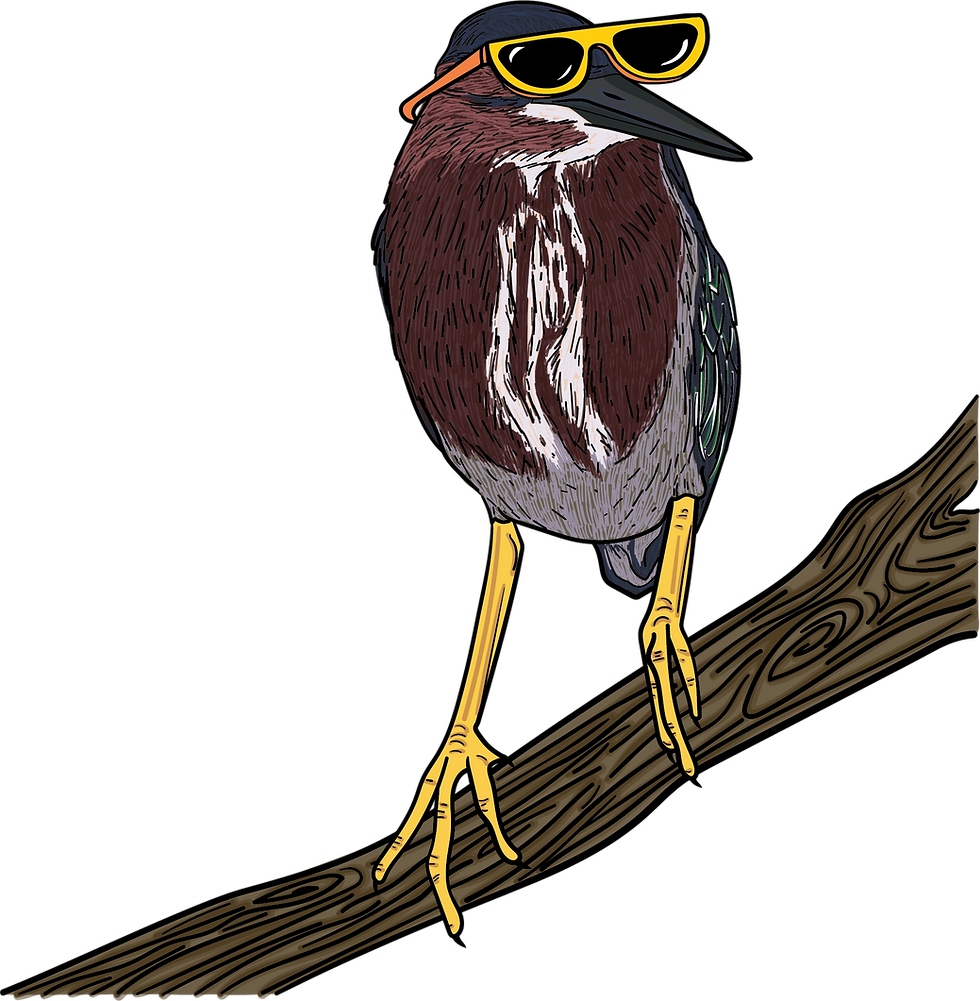
Little Green Heron
Butorides virescens
My favorite wading bird.
8 Reasons Why:
1. They are little and colorful
The little green heron is a good name for a little green heron.
They are little and green. At least they look green in some lighting. From far away on a cloudy day they look like a small, grayish-brown, rather boring bird. Easily mistaken for a crow or just a plain old duck.

But then the sunlight hits, and everything changes.
Their wings shimmer with green and blue iridescence, and their
bright golden-yellow eyes and legs seem to glow just like the sun that's shining on them. Males and females look similar, though females are slightly smaller and duller in color, especially during breeding season. Juveniles mirror their parents but in even paler tones, with greenish legs instead of yellow. That greenish plumage isn’t just for looks either, it helps them blend into their
surroundings like sneaky little feathered ninjas.

2. They have mohawks and attitude
These little herons are the introverts of the wetland world.
They're solitary, secretive, single and not ready to mingle.
You can find them tucked quietly into the dense vegetation of wetlands across the United States, Central America, and northern South America, doing their best impression of a grumpy shrub. In their classic crouched pose, they look permanently annoyed,
like someone just asked them to join a group chat.

Mostly, they’re just patiently waiting for prey though… or actively avoiding eye contact and small talk. They'll try to ignore you but
if you disturb them, oh, the drama.
First come the quick, nervous tail flicks.

Then their crest feathers start going up and down like a
feathery alarm system. Shwing! Mohawk! Unshwing. No mohawk.
In seconds they go from imitating a rock to punk rock and back.

Push your luck a little further, and they’ll launch into the air with a loud, scolding skeow! skeow!! You can practically hear them muttering UNBELIEVABLE. The nerve! as they fly away in a huff.
And just to really drive the point home, they often leave behind a
not-so-subtle white streak mid-exit. A parting gift of excrement.
A statement piece of liquid feces to really show how they feel.
This signature move has earned them some wonderfully ridiculous nicknames over the years like fly-up-the-creek bird, shite-polk,
and the ever-classy chalk line. Nature is majestic.

3. They have accordion necks
They usually hold their necks close to their body when in small, grumpy crouch mode. But they look like a totally different bird
when they stretch their E.T. necks out. Stretchy necks are great
for catching prey just out of normal neck range.
Or for attracting the ladies.
Males stretch their accordion necks forward and back, snap
their bills, call repeatedly, point their bills straight up while
swaying their bodies back and forth and show off their mohawks
to impress the girls. What girl doesn’t love accordion?

4. They’re good parents
Green heron couples work together to build nests, incubate eggs,
and raise their young, but true to form, they keep it small.
Pairs nest alone or occasionally in tiny groups, rarely in colonies.
A colony would simply be too much.
Males scout the location and start construction, typically five to twenty feet up in a shrub or tree near water. Nothing fancy,
just a simple platform of sticks. Then the female takes over
the build while the male runs materials. A typical nest holds
three to five pale bluish-green eggs.

Both parents take turns incubating the eggs for about 20 days.
When the babies hatch the parents start sharing feeding duties,
which means alternating the delivery of fish-flavored regurgitation
to some very demanding, little mouths.

By day 16, chicks are already walking around the nest.
First flights happen around 3 weeks after hatching, with
parents still on food duty for a few more weeks after that.
Once the nest is empty and the chicks are independent,
the couple quietly parts ways and returns to the solitary life.
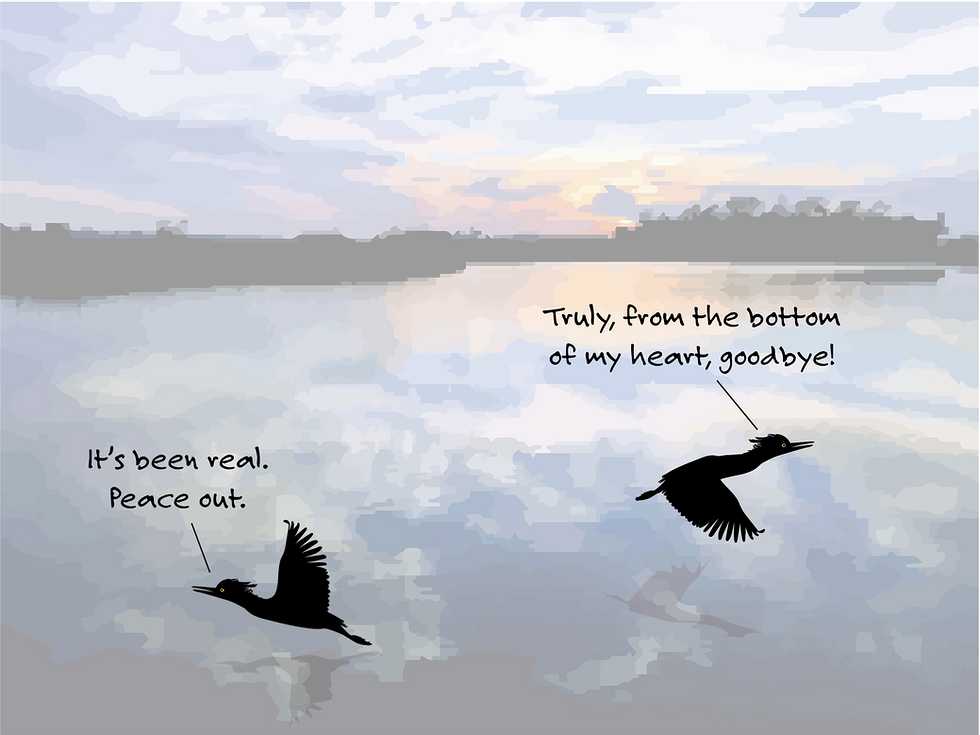
Until next breeding season, when they'll find a new partner
to take turns vomiting fish into the mouths of the
next generation all over again.

5. They use tools
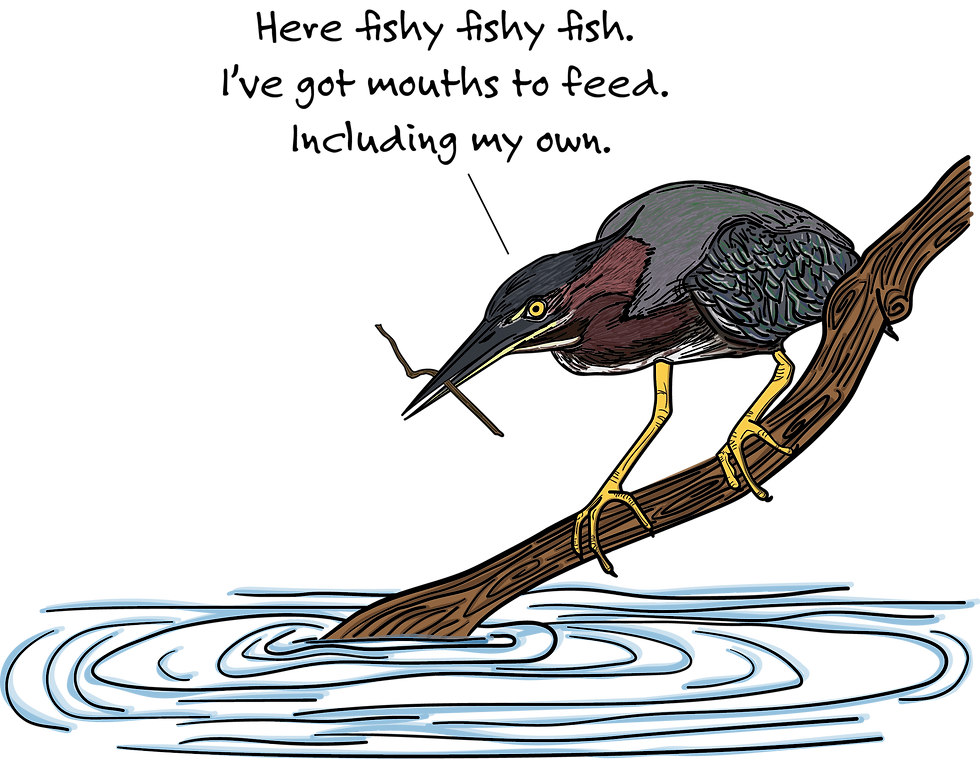
Green herons are one of the few bird species in the world that actually use tools. They drop bait - feathers, twigs, insects, bread crumbs, whatever's handy - onto the water’s surface to lure fish
within striking distance. Tiny, grumpy fisherman who figured out
the system. They have an impressively broad menu: fish, eels, crustaceans, aquatic insects, spiders, frogs, tadpoles, grasshoppers, snakes, earthworms, snails, and the occasional small rodent.
They're mostly active during the day but will hunt at night too. Especially when they must work overtime to offer a pre-digested selection of the above directly into the mouths of the next
generation of grumpy but clever fisherman.
6. They don't like getting their feet wet
Herons are often seen wading through shallow water, their long
stilt-like legs keeping the rest of them comfortably dry. But not green herons. They seem to prefer keeping their feet high and dry entirely. You'll often find them perched on low vegetation or the shoreline, peering down at the water like it's beneath them. Which it is.
They’re capable of wading, swimming and even diving to catch
their prey but why do that if they can stalk from above?
They patiently wait for prey to approach their branch, use
their tools and enjoy their dry toes. Efficiency. Dignity. Dry feet.

7. They don't like being cold
Green herons aren't picky about water. Lakes, ponds, rivers, marshes, reservoirs, swamps, streams - fresh or salt - any aquatic habitat is just dandy, as long as it's lined with dense vegetation for hiding, nesting, and perching purposes. But it had better be warm. Come cold weather, the ones living across the United States head south to the warmer states, Central America, and northern South America. The year-round residents already living there have no reason to leave and know it. They are just fine where they are thank you very much.
Wet feet they can avoid. Cold feet they will not tolerate.

8. They are survivors
Little green herons are shy and hard to spot, but still a pretty common sight for wetland visitors. Their status remains stable at the least concern level. But like most species, their population is slowly declining due to habitat loss, human disturbance, and pesticide use. The average green heron lives 5 - 11 years in the wild, 16 in captivity.
Some suspect there are subspecies - migratory herons appear
to have longer wings than year-round residents - but that is
still being disputed. What’s not argued is that they are cool
and have been cool for 32 million years. Cool. Not cold.
Because their feet are warm and dry.