For the Love Of Nature, Art and Bad Humor
A Comic Gallery of Creative Expression in the Pursuit of Knowledge
The Wekiva
A Love Letter

Before the mouse showed up with its churros,
singing robots, and $19 water, tourists came to Central Florida
to see some real magic: the springs!
That crystal-clear spring water has always drawn people,
even before travel blogs told them to.

Central Florida is home to the highest concentration of freshwater springs on the entire planet. That’s right, we’ve got more magical water holes than anywhere else, hundreds of them! Without a single animatronic pirate in sight. And the only turkey legs you’ll find
are those still attached to wild turkeys.

These springs and their surrounding basins provide essential
habitat for a wide variety of plant and animal species.
People love them too. Long before sunscreen-clad tourists showed up with pool noodles and waterproof phone cases, Indigenous peoples cherished these waters for their beauty, freshwater, and ecological richness. Today, locals and visitors from around the globe flock to Florida’s springs to enjoy nature’s original waterpark.
Because they are cool. Literally. 72 degrees all year round.
They remain major attractions, despite the competition from
fake castles and roller coasters. These stunning natural wonders are not only vital to Florida’s environment but also to its economy, conservation efforts, and cultural heritage.

It's remarkable springs exist at all.
Millions of years ago, much of Florida lay beneath the ocean.
Over time, layers of limestone accumulated under the sea,
eventually shaping much of the state's distinctive terrain.
As sea levels rose and fell, parts of this porous limestone dissolved, creating a fascinating geological landscape of sinkholes, caves,
and an underground drainage system known as the
Floridan Aquifer, Florida’s most crucial source of fresh water.
But that fresh water isn't a spring yet...

When it rains, the water seeps through the limestone
and replenishes the Floridan Aquifer, gradually raising its water level. (Scientists call this recharge.) As more water fills the aquifer, the pressure builds from both the weight of the water and the surrounding bedrock. Eventually, that pressure pushes the water through natural openings in the limestone. Voila! A spring.

This story centers on a remarkable spring: Wekiwa Springs,
Florida’s first and longest-running tourist attraction.
Just north of Orlando, it remains one of the most popular springs
in the state, drawing around 434,000 visitors each year.
The spring discharges roughly 43 million gallons of water daily from the Floridan Aquifer. That water travels 16 miles downstream,
forming the Wekiva River, one of Florida’s most pristine waterways. The Wekiva eventually joins the St. Johns River before
flowing into the Atlantic Ocean.
The names Wekiwa and Wekiva come from Creek-Seminole origins: Wekiwa means 'spring of water,' while Wekiva means 'flow of water.'

In 1890, nearly 70 years before Disney started charging people
to stand in line, Wekiwa Springs, then known as Clay Springs,
was already the place to be. It had a hotel, a bathhouse,
and probably a lot of mustaches.
Over the years, the land changed hands multiple times and was
used for hunting and logging before officially becoming a state park
in 1970. The spring’s glittery water, lush tropical hammocks, abundant wildlife, and scenic uplands have drawn hundreds of thousands of visitors annually for generations. Human, plant and animal.

The surrounding basin encompasses 70,000 acres of
state-protected land and is home to 31 additional named springs.
This rich and diverse habitat is vital for wildlife, including
endangered, threatened, and sensitive species. Among them are the American alligator, wood stork, little blue heron, tricolored heron, limpkin, bald eagle, gopher tortoise, manatee, needle palm,
several orchids and other rare plant species.

And Florida’s biggest black bear population, just casually roaming the place like it’s their backyard. Because it is.
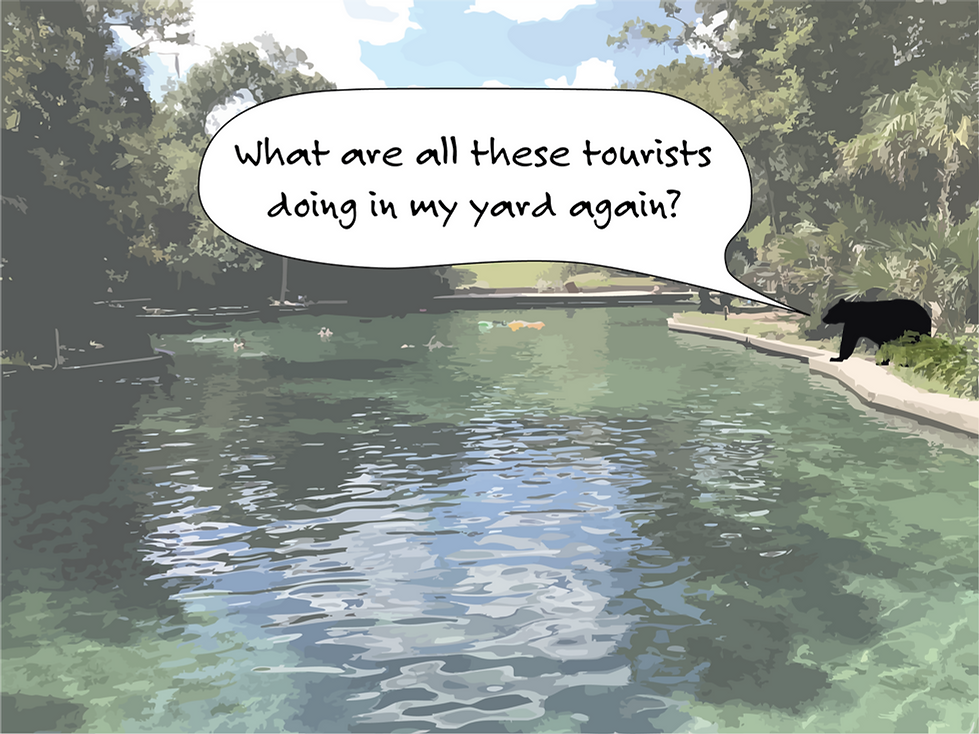
There are only a handful of rivers in the United States as
special and untouched as the Wekiva River. So few that in 1968, Congress created the National Wild and Scenic River program
to help protect the rivers that are still in a free-flowing condition
for the enjoyment of present and future generations.
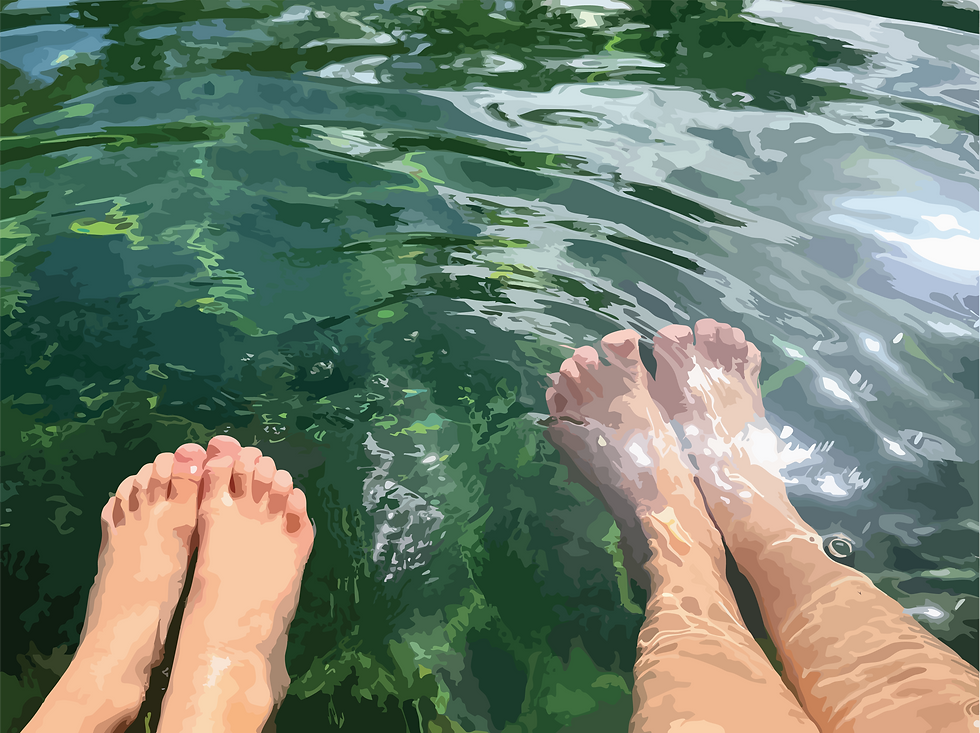
The Wekiva River system earned its special federal recognition of being a National Wild and Scenic River in 2000.
Only 2 out of 1,700 rivers in Florida have that title.
(The other is the Loxahatchee River.)
There are 227 Wild and Scenic rivers in the nation.

The Wekiva River system includes the Wekiva River,
Rock Springs Run, Wekiwa Springs Run, and Blackwater Creek, spanning three Florida counties: Orange, Seminole, and Lake.
.png)
This region is a vital recharge area for the Floridan Aquifer,
which supplies water to the 31 named springs within the system.
To qualify for designation under the National Wild and
Scenic Rivers System, a river must possess at least one
"Outstandingly Remarkable Value" (ORV) such as:
-
scenic beauty
-
recreational opportunities
-
wildlife and habitat
-
historic and cultural significance
-
exceptional water quality and quantity
The Wekiva River system has all five.
That’s right, the Wekiva didn’t just pass the test, it aced it, smiled for the camera, and high-fived a bald eagle on the way out.

In addition to being a federal Wild & Scenic River,
the Wekiva has other designations, too:
-
Outstanding Florida Waterway
-
Florida Aquatic Preserve
-
Florida Canoe Trail
Various committees, along with state and local partners, are officially responsible for protecting and enhancing the Wekiva River’s ORVs.

But despite these titles and efforts,
the Wekiva River is in trouble.
There are 3 big problems:
1. Water Flow Levels
Springs and rivers may seem all carefree and go-with-the-flow,
but even they have standards. Like, for real. They have measurable flow rates, usually calculated as the volume of water moving
per foot per second. Like a speedometer, but for nature.
Each spring or river has a specific flow range considered safe, known as Minimum Flow Levels, or MFLs. These benchmarks help ensure that water bodies remain healthy and sustainable.
Regulatory agencies are tasked with monitoring these flows
and ensuring groundwater pumping and other disruptions
don’t push levels below the safe MFLs.
It helps keep rivers from turning into sad puddles with
fish side-eyeing us in judgment.

In 2016, a law was enacted requiring Florida’s Department of Environmental Protection to protect springs by preventing groundwater withdrawals that could cause harm.
However, the current regulations are falling short.
Despite the river’s legal protections, significant damage is already occurring, habitat loss has reached 15%, and the health of the
springs continues to decline.

About 2 million people live within 30 miles of the Wekiva River system, and Orlando is growing faster than a rumor at a family barbecue.
New neighborhoods are popping up like mushrooms after a summer rain, except these come with sprinklers and a surge in permits for more groundwater withdrawals. As a result, water is being pumped from the Floridan Aquifer faster than it can naturally recharge, currently at a rate 40% higher than what the aquifer can sustainably handle. This overuse has caused water levels in nearby lakes, springs, and wetlands to drop to historic lows.

Fish, manatees, shrimp, and countless plant species rely on a consistent flow of water for their food sources and habitat.
The whole entire wetland ecosystem does. But despite this, we keep handing out new groundwater permits like free samples at Costco.
The permits are being used to support agriculture, landscape irrigation, commercial operations, industrial use, and massive new neighborhoods named after the very nature they’re replacing.
We’re draining more than the aquifer can handle.

Recovery plans are in the works to restore healthy Minimum Flow Levels (MFLs), but under state law, that process can take
up to 20 years! Meanwhile, groundwater pumping continues. The concern is that if action isn’t taken sooner, the damage could become irreversible, leaving little or nothing left to recover in two decades. Leaving us drained, emotionally and hydrologically.
In the not so distant future:

2. Excess Nutrients
Like many waterways around the world, the Wekiva River is overloaded with nutrients, primarily nitrogen (in the form of nitrates) and phosphorus. While both occur naturally, excessive amounts can cause serious problems.
In the Wekiva, much of this nutrient pollution comes from fertilizers, leaky sewage pipes, and septic systems.
The result is a rampant growth of slimy, gross, algae-party- crashers with zero chill or cares. They block sunlight from
reaching native submerged plants, leave fish looking for oxygen
like it's on backorder, and generally disrupt key habitats
and functions of the aquatic ecosystem.

Despite existing regulations and restoration efforts, nitrate levels
in the Wekiva remain four to five times higher than the target goal.
And with water levels dropping like your phone signal in the woods, the concentration of these pollutants only intensifies, making an already urgent issue even more critical.

3. Loss of Habitat and Invasive Species
As urban development around the Wekiva River expands,
wildlife is left with fewer natural spaces to inhabit.
Their once-spacious natural habitats are now chopped up by neighborhoods, roads, strip malls and Walmarts.
What’s left are scattered pockets of wilderness, like nature’s
version of studio apartments but miles apart from each other.
This isolation can lead to genetic problems from inbreeding,
or in some cases, no breeding at all.

As if the Wekiva River didn’t have enough problems, now it’s being invaded too. A whole new cast of invasive plant and animal invaders has moved in, loving the subtropical climate and acting like they own the place. Native species, already stressed from shrinking habitats, pollution, and low water levels, are now getting pushed around by these aggressive newcomers.
On the plant front, it’s like a botanical version of Hoarders.
Wild taro, water hyacinth, hydrilla, primrose willow, torpedo grass, elephant grass, and paragrass are crowding the waterways, guzzling nutrients and turning the river into an all-you-can-grow buffet.
Except hardly anything eats the new plants on the block. They are the Real Invasive Plants of Seminole County -throwing shade, stealing nutrients, and stirring up drama.

Water hyacinth. It’s pretty!.. bad. It has the highest growth rate of any known plant. It spreads across the water like a leafy blanket, blocking sunlight from submersed native plants below. It sucks up oxygen, drops piles of rotting mush to the bottom, becomes a 5-star hotel for mosquitoes, and kicks biodiversity to the curb.
And that’s just one of many problem plants.
Meanwhile, in the fish world, it’s no better. Blue tilapia, brown hoplo, sailfin catfish, walking catfish, and chanchitas are swimming in like they’re the new landlords, leaving native fish struggling to keep up.
It’s the Aquatic Hunger Games and the locals are losing.

Sailfin catfish. (Plecos) are easy to spot. They’re everywhere! Originally from the Amazon, they’ve made themselves at home in Florida’s freshwater and their trouble. These fish burrow into shorelines to lay thousands of eggs, which can cause erosion.
In the winter, they latch onto manatees resting in the springs to suck on the algae growing on their skin. While it doesn’t hurt the manatees, it can cause stress as they try to shake them off, burning energy when their supposed to be conserving.
On top of that, they outcompete native fish for resources, throwing off the whole food chain. They suck. Literally. And that’s just one of many problem fish.


But so is the
HOPE!
There are 3 big solutions:
1. Reduce Water Use
It might be a hot minute before the state gets its act together. Bureaucracy moves slower than a gator on a chilly morning.
But Floridians are a resourceful, salty bunch of veterans who
host parties during hurricanes. State recovery plans might help eventually, but the real power is in every Floridian’s backyard.
Water is in demand for golf courses, crops, theme parks and all kinds of stuff. But a whopping 50% of the water pulled from the Floridan Aquifer goes straight to keeping lawns wet and green enough to blind passing airplanes. Fifty percent! If we all dialed down the sprinklers, swapped some turf for native plants, or just let our grass embrace its crunchy brown truth now and then, we could save the aquifer ourselves.
Like the true heroes we are.

2. Go Native
It needs to be said; turf lawns suck…up a ridiculous amount of water. Seriously, they’re thirsty, needy divas. It takes A TON of water to keep that grass looking green year-round, especially in Florida, where the dry season lasts longer than most celebrity marriages.
For about 8 months of the year, Floridians are out there
watering, fertilizing, babying their lawns like they’re trying to
raise a particularly entitled and ungrateful child.

And what do the lawns give back? Nothing.
Except for maybe some outdated suburban, cultural pride in
having large, open grassy areas that symbolize wealth status and
the pride of homeownership. Which is so 16th century.

Sod gives almost nothing back to environment.
Not much eats it. It doesn’t host birds, butterflies or bees.
It doesn’t provide a lot of shade or shelter or even good vibes!
It’s a huge drain on our water supply, wallets, and biodiversity.

Florida native plants are the real MVPs, evolved over millennia to handle this swampy, storm-prone, sun-scorched state like champs.
They thrive through dry spells, downpours, bad soil, and even the occasional Category 5 weather tantrum. No special watering schedule. No chemical cocktails. Just pure, local resilience.
And they are BEAUTIFUL.

Plus, fun fact: Florida means full of flowers.
So let’s get back to that. There's a whole world of
native ground covers, tropical stunners, and blooming beauties
out there that don’t guzzle water or leech your bank account.

Not in manicured grass that does nothing,
but in vibrant, buzzing, eco-friendly yards
that actually support life.
Let’s make turf lawns the new mullets:
outdated, high-maintenance, and best left in the past.

3. Get Involved
There are a lot of reasons to protect our springs beyond
them just being trendy, shimmery photo ops for Instagram reels; they’re economic powerhouses too. The Wekiva basin alone
offers around 500 jobs related to natural resources,
$60 million in output sales, and $23 million in personal income.

But more importantly, by protecting the springs, we are protecting ourselves. Floridians are in this together. Even those who don’t particularly care for the springs, hugging cypress trees, or
canoeing with prehistoric reptiles should care.
Why?

Because
spring water
is our water.
It’s what we drink, cook with, bathe with, and make ice with
for our hurricane coolers and cocktails. And despite Florida being surrounded by water, our fresh water is not unlimited.
Our golf courses, lawns, crops, springs and our homes could all run out of water if we don't ALL reduce our use.

Everyone needs to do their part. Conserving water and going native are huge in this story, but there’s more we need to do:
-
Convince neighbors to conserve water and go native, too.
-
Convince HOAs that sod lawns are as unnecessary as multiple decorative pillows are on a bed.
-
Conserve water inside our homes as well, by taking shorter showers or upgrading to low-flow and energy-efficient appliances.
-
Protest the changing of conservation land to commercial land use.
-
Promote development and urban planning that’s smart, sustainable, and Florida-friendly.
-
Support local environmental groups and follow their lead.
The list of suggestions is as long as the reasons we should. Because tragedies have happened before. Some Florida springs that used to be beautiful tourist destinations are now dried up. Or been so choked out by algae that they are now just sad, green mud pits supporting little life. Let’s not let that happen again. (sad fish swimming around with an algae beard)
Even the way we play in the springs could be more respectful. With every passing year, more and more people visit Florida’s springs. Many visitors trample over native plant life, leave trash, and contribute to the erosion of banks and shores. Even if you’re not one of those people and clean up after yourself and claim to LOVE the springs that’s not enough. Loving something is not enough to save it. It’s the actions we take at home that really prove our devotion.

Springs aren’t just beautiful tourist hot spots in our backyards;
they are givers of life.
To all Floridians: plant, animal, and human.
May they continue to be loved by tourists and protected by Floridians for the sparkling wonders they are for generations to come.
Love our springs. Loved to death.

References:
https://www.cfpublic.org/2025-01-17/development-is-taking-a-toll-on-floridas-precious-springs
https://www.floridastateparks.org/parks-and-trails/wekiwa-springs-state-park
https://www.wekivawildandscenicriversystem.com/
https://www.friendsofwekiva.org/
https://myfwc.com/wildlifehabitats/habitat/invasive-plants/weed-alerts/water-hyacinth/